

Shoulder Pain Therapy and Treatment in Toronto and Scarborough
Suffering From Shoulder Pain? Toronto Physio Therapy Can Help – Book an Appointment Today!
Often we don’t think of our shoulders much on a day to day basis, but when you suddenly experience pain in one of them it can be debilitating and may consume your thoughts. Shoulder pain can make a normal everyday task such as washing your hair or reaching overhead daunting.
Shoulder pain is the third most common musculoskeletal complaint resulting in physiotherapy. It is recognized as a disabling problem which can be associated with significant economic burden. The pain and disability associated with shoulder pain can have a large impact on individuals, their families and the health care system since it often affects daily function and the ability to work.
While this article provides information on some of the conditions associated with shoulder pain. Your chiropractor at Toronto Physio will give you more detailed information about your specific case, as well as a treatment plan tailored to your needs.
The shoulder joint is a highly mobile but very unstable joint, and therefore prone to injury. The shoulder itself is a grouping of bones and articulations; the humerus bone from the arm, the scapula or shoulder blade, the clavicle and the sternum or breast bone.
Whenever the arm is being moved these bones are moving. There are a series of muscles that over lap the shoulder joint. The most visible being the deltoid muscles which are compromised of the anterior, medial and posterior muscles. Also important are the rotator cuff muscles; teres minor, sub scapularis, infraspinatus and supraspinatus.
Common Injuries Involving Shoulder Pain
- Rotator Cuff Tendonitis
- Rotator Cuff Tear
- Adhesive Capsulitis/Frozen Shoulder
- Osteoarthritis of the Shoulder
- Overuse Syndrome
Rotator Cuff Tendonitis
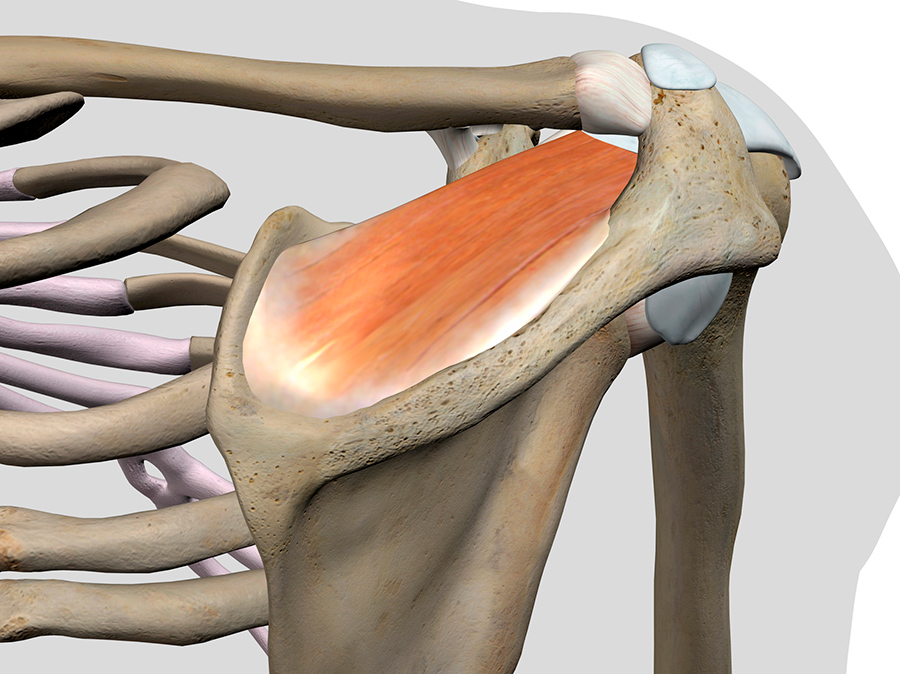
Are you experiencing difficulty moving your arm? Have you been hearing a “clicking” noise in your shoulder? You may be experiencing rotator cuff tendinitis otherwise referred to as “impinged shoulder or impingement syndrome”.
Rotator cuff tendonitis can be caused by an injury or be the result of simple wear and tear. This condition can be very painful and result in diminished mobility as it continues to inflame the connective tissues, which help the shoulder move. The inflammation of the connective tissues often results in serious pain when moving the arm – reaching or lifting.
However, some people also experience pain while the shoulder is still. Patients experiencing Rotator cuff tendinitis often describe shoulder stiffness and swelling/ tenderness at the front of the shoulder. At Toronto Physiotherapy, your doctor will examine the shoulder and check for tender points or abnormalities, to determine how to treat your specific case of rotator cuff tendinitis.
Rotator Cuff Tear

Usually, a Rotator cuff injury is brought on by a fall, a direct blow, or a sudden application of force (such as tugging on a starter cable). Although some people may have little symptoms, rotator cuff ruptures are always accompanied by weakness in the particular muscle-tendon which can cause shoulder pain overtime.
Something particularly interesting about Rotator cuff tears is that the degree of the tear does not always exactly correlate to the amount of pain and suffering a person will experience. In plain terms, someone with a partial tear may experience intense agony, whilst someone with a complete tear may experience a lot less pain.
Nonetheless, it is extremely important to practice strengthening and stability exercises to restore balance and proper coordination in the shoulder complex. These exercises should be guided by a physiotherapist. Mobility and flexibility interventions are often necessary, as exercises targeting the thoracic spine, scapulothoracic joint and cervical spine can greatly improve shoulder mechanics and encourage optimal healing.
Individualized treatment plan is required and people with Rotator cuff tears can expect to improve with physical therapy exercises, chiropractic care and massage therapy.
Adhesive Capsulitis/Frozen Shoulder

You may know of Adhesive capsulitis by its more identifiable name “Frozen Shoulder”. The name of this conditions is explanatory in that many people who have Adhesive capsulitis do in fact experience a “frozen” shoulder. These individuals can become reluctant to move their shoulder due to the significant accompanying pain and discomfort.
However, this hesitancy can result in further complications as in some cases it can become physically impossible to move the shoulder for several weeks or months. Physiotherapy is an extremely important and in most cases necessary intervention. Adhesive capsulitis generally responds deftly to nonoperative treatment. This condition is commonly recognized as occurring most often in individuals aged 40-60 and more often in women than in men.
Additionally it more typically occurs to people with various medical conditions, such as diabetes, high cholesterol, or thyroid disorders. Adhesive capsulitis can follow from a rotator cuff impingement, a tendon tear, or accident.
Osteoarthritis of the Shoulder

Many people have the tendency to look of osteoarthritis as something that affects the knees and hips, while true, the condition can also occur in the shoulder and have a painful and debilitating effect. This condition is known as a degenerative joint disease of the shoulder and can commonly be referred to as “wear-and-tear” arthritis in the shoulder. It is a gradual/ progressive breakdown and wearing of the articular cartilage which causes great pain and stiffness.
The prevalence of this uncomfortable condition among elderly individuals is rising and can inevitably cause significant stress and frustration in affected individuals as it continues to inhibit and reduce the range of motion in the affected person’s shoulder. Nonsurgical treatments can slow the progress of Osteoarthritis in the shoulder and aid in pain relief or management.
Our plan for your healing can ease your pain, preserve your mobility and allow for you to stay active.
Shoulder Overuse Syndrome

Overuse syndrome is an alternative name to repetitive motion disorder. This syndrome generally affects individuals who have the tendency to repeat a specific motion throughout their day- to- day. Performing repetitive tasks can place repeated stress on a specific area, such as your shoulder and this can lead to fatigue and pain that may spread to body parts such as the arms and hands.
Other ways in which overuse syndrome affects some individuals is by creating swelling and a numbness sensation. It is often difficult to stop engaging in the tasks that trigger your pain, especially when your livelihood may depend on them. A treatment plan recommended by your chiropractor therefore may suggest massage to ease the pressure caused by the repetitive task, as well as, physiotherapy and chiropractic care.
Book a Consultation Today!
Are you looking for lower back pain treatment in Midtown Toronto or Scarborough? Our injury rehabilitation clinics are conveniently located at Bloor & Dufferin in Toronto or Eglinton & Kennedy Rd in Scarborough.
At Toronto Physio Therapy, we offer physiotherapy, chiropractic care, massage therapy, acupuncture, and other injury rehabilitation services that are covered by your health insurance.

