

Elbow Pain Therapy and Treatment in Toronto and Scarborough
Suffering From Elbow Pain? Toronto Physio Therapy Can Help – Book an Appointment Today!
Elbow pain is most commonly the result of overuse. Certain sports, jobs and pastimes require repeated movements. In some cases, these repetitive motions place significant strain and pressure on the elbow creating pain. It may be hard for people to locate the exact cause of their injury since it is often not due to a specific occurrence but rather the gradual and repeated use.
Generally, however, the elbow is less susceptible to wear and tear injuries than other joints in the body. Your elbow is a joint composed of bone, cartilage, ligaments and fluid. Muscles and tendons allow the elbow joint to move. If any of these structures are injured, you may suffer from elbow problems.
Depending on how severe they are, elbow injuries can cause symptoms like pain, swelling, numbness, tingling, weakness, or a reduced range of motion. Toronto Physio Therapy is here to help you recover.

Common Injuries Involving Elbow Pain
- Lateral Epicondylitis (Tennis Elbow)
- Medial Epicondylitis (Golfer’s Elbow)
- Hyperextension Injury
Lateral Epicondylitis (Tennis Elbow)

Lateral epicondylitis is more commonly recognized as Tennis elbow. Despite that name, athletes are not the only people who can be affected by tennis elbow. Lateral epicondylitis is an example of a repetitive motion disorder, it occurs when the tendons in your elbow are overloaded. Leading to inflammation and in some circumstances, micro tearing of the tendons. Individuals in occupations that demand repeated motions can suffer from Lateral epicondylitis.
People that experience Lateral epicondylitis often describe the pain as primarily occurring in the area where the tendon of their forearm muscle attaches to the bony bump outside of the elbow. They also typically experience the pain radiating to their forearm and wrist. The pain that a person may experience with Lateral epicondylitis can create weakness and difficulties when attempting certain motions such as opening a door or shaking hands.
Fortunately, there is a large range of treatment options for Lateral epicondylitis. Most often, a conservative approach, involving chiropractic care, physiotherapy, laser therapy and radio shockwave therapy is effective in achieving pain relief.
Medial Epicondylitis (Golfer’s Elbow)
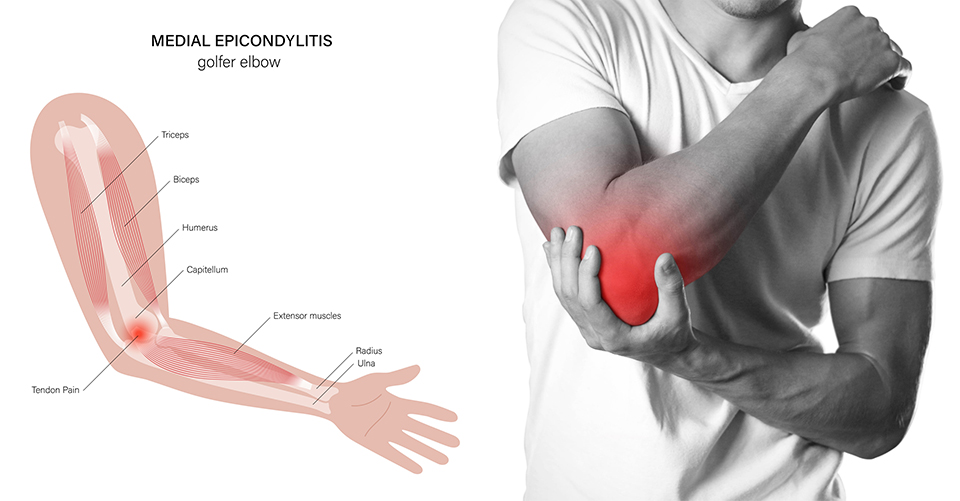
Golfer’s elbow is otherwise recognized as Medial epicondylitis. It is a condition that creates pain on the inside of the elbow, close to the “funny bone” region. People experiencing Medial epicondylitis typically describe their pain as a tenderness occurring in the bony bump inside the elbow (the epicondyles).
This condition is the result of overuse, specifically overuse of certain muscles and tendons in the forearm and elbow. Repetitive motions such as shoveling, and hammering can place great stress on the elbow tendons and cause inflammation. Repetitive and forceful gripping and twisting activities can also damage the tendons at the elbow resulting in Medial epicondylitis. While Medial epicondylitis is similar to Tennis elbow in that they both occur from repetitive motions, Golfer’s elbow is known to be the opposite of tennis elbow, since tennis elbow affects the tendons on the outside of the elbow (as opposed to the inside).
Like tennis elbow, you do not have to be an athlete to suffer from this condition. Although, it does affect a wide variety of competitive athletes. To heal this condition, it is recommended to rest the area initially using cold therapy and elevation. Once the pain has moderately subsided and a chiropractor determines it is the appropriate time, exercises guided by a registered physiotherapist or chiropractor will aid in restoring strength to the area, relieving pain, and increasing flexibility.
Hyperextension Injury
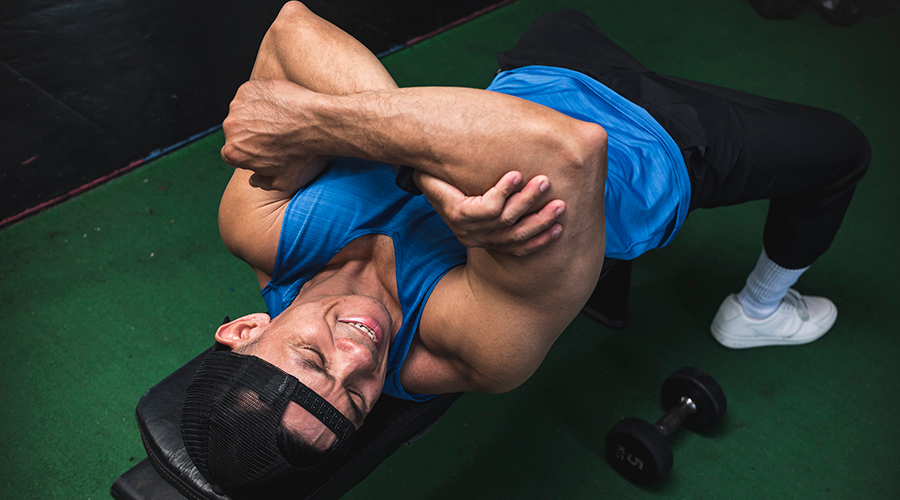
A hyperextension injury of the elbow occurs when your elbow is bent too far back or suddenly bent in the wrong way. Some clients who visit our physiotherapy clinic experience this injury after a fall where their arms were stretched in front of them. It can also happen from an accident during weight-bearing activities such as weight training or gymnastics.
This injury can cause significant pain and potentially damage the ligaments. If you heard a popping sound at the moment of the injury and are now experiencing pain in the front of your arm near the elbow joint, especially when you straighten your arm or touch the area – you are likely suffering from a hyperextension injury. It is important to immediately rest the area, use cold therapy (ice wrapped in a cloth) and restrict movement allowing it time to heal, compression and elevation may also help in reducing swelling.
Once the injury has time to heal a chiropractor can treat the area and advise you on when to exercise or begin physical therapy at our Toronto or Scarborough offices to strengthen the muscles surrounding the elbow and encourage the ligaments to heal further.
Book a Consultation Today!
Are you looking for elbow pain treatment in Midtown Toronto or Scarborough? Our injury rehabilitation clinics are conveniently located at Bloor & Dufferin in Toronto or Eglinton & Kennedy Rd in Scarborough.
At Toronto Physio Therapy, we offer physiotherapy, chiropractic care, massage therapy, acupuncture, and other injury rehabilitation services that are covered by your health insurance.

